First, I want to say “Thank You” for joining me here. It means a lot that you’ve come.
One day, this will be one of those posts that I’ll cringe at and go, “Oh, what a first post! What was I thinking!?” But for now, I want to be transparent with you (and with me!!) about my purpose here. I want to come back to this post to remember why I started this blog. Put succinctly, I want to do four things: increase our capacity for empathy, increase awareness to mental health issues and other challenges associated with living in the South, become a better writer, and become a film critic who focuses on the lessons the director wants to leave with his or her audience. Let’s dive into each of these four topics.
1) Increase our capacity for empathy
Most people, except a very defensive few, can empathize with other people based on what they’ve personally experienced. For example, if I came up to you and told you that I stubbed my toe against a corner, you’d probably “get” where I’m coming from. You might nod your head slowly or wince, thinking back to the time when you stubbed your toe against a corner. The previous example would be something that just about everyone can empathize with, but then there are other things that are harder. A super annoying kid in class that just won’t shut up, that coworker who makes fun of you for no reason, or the family member that’s weirdly obsessed with you and cares about you, but you don’t understand them yourself. How do you begin to empathize with that person who either doesn’t open up about themselves enough for us to empathize with in the first place, or people who come from such a vastly different life experience that it would be easier to misunderstand? To judge? To stereotype? To make assumptions about? It’s easier. There are some people that society says we’re supposed to feel sorry for, like children or people with severe mental health issues like low functioning autism, therefore some of us put in a minimal amount of effort in understanding individuals like these. However, we spare no such effort to people who’s flaws affect us in a directly negative way, or people who’s struggles are far away from our life, like the homeless when we’re traveling or the coworker that calls us but we ignore because we’re not required to pick up the call. What kind of person does it take actively build empathy for the people we dislike? What kind of person does it take to actively build empathy for the people it would be easier to blatantly misunderstand? Right now, I can work on building empathy. If I cared more, I wouldn’t be estranged from my family. I believe we can start building empathy for other people by recognizing that we don’t want to do it for some people. From there, we can choose to either continue the status quo or seek to mend misunderstanding by watching films starring characters that remind you of that difficult individual ultimately leading up to an honest conversation with that person. You’d be surprised how much you can learn about someone by simply asking. Through my personal stories and film reviews, I hope that both you and I can learn to be the kind of person who wants to understand…to build empathy…to care when no one else does. We may not be able to understand every situation of every person who’s ever lived, but if we can just care about those that surround us, we’re breathing fresh life into a blatantly misunderstanding world simply because it’s easier to ignore what someone else is going through.
2) Increase awareness to mental health issues and other issues relating to the South
Let me start by getting some buzz words out of the way. I’m an African-American male who grew up in Cary, North Carolina…the South. My mother was black, but I went to a “white” school for elementary, then I was homeschooled for a while, then I went to other “white” schools from middle school to high, and then I went to “white” colleges. So now, I’m a black man with mainly white friends.
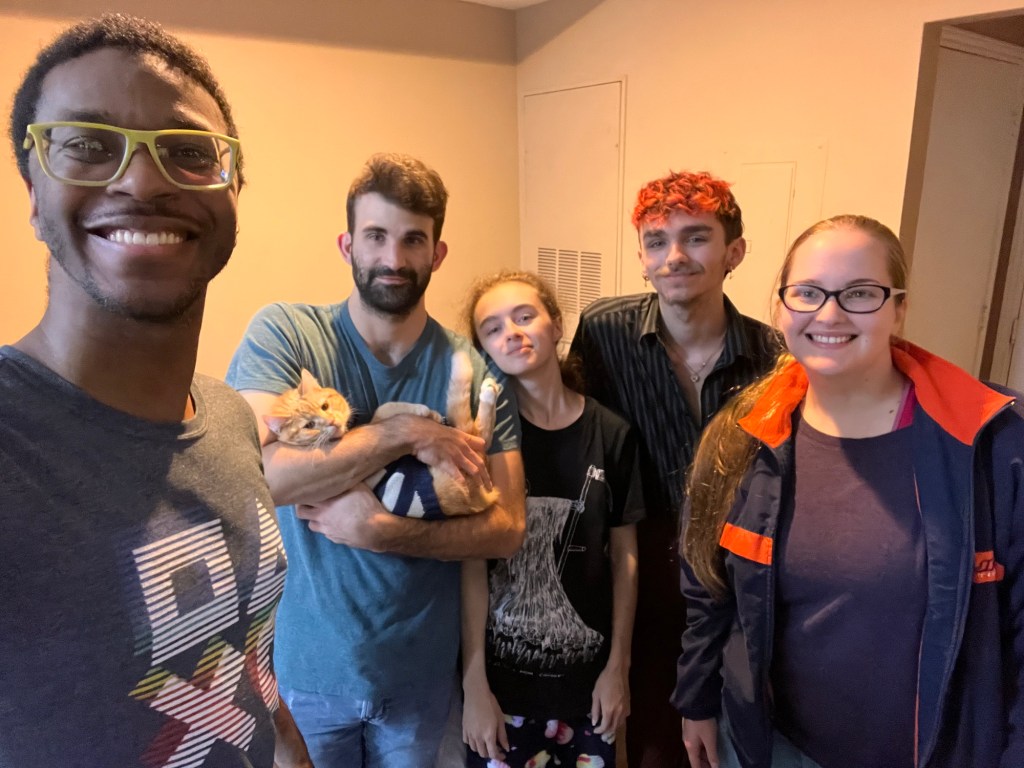
Am I saying this is a bad thing? Nope! I don’t feel bad about it at all. But this is a kind of experience that I haven’t heard talked about, so I want to talk about it here. I also grew up Christian in the Seventh Day Adventist tradition. The church I went to in North Carolina as a kid was “white,” but all the churches I went to with my Godfather in Augusta, GA were most definitely black. Most black people I know, still to this day in the US South, are Christian. So when I decided that I had enough of the religion, since I didn’t feel it helped me. It hurt me. I feel like an even further outcast. Not only do I not have black friends and know about my own culture, I don’t even believe in the death and rise again of Jesus Christ, a very, very important staple in the black community. I don’t feel compelled to return to Christianity just because other black people are, but I want to share my reasonings for leaving the faith and detail my updated thoughts on religion as I study, learn, and grow in this way. But it certainly is weird to be a black non-Christian in the South, I’ll tell you that. As a man, the “kill-all-men” militant view of feminism really hurts me, even though I’d consider myself a feminist. I think we need to do better about teaching our men to keep their hands off of women, drunk or not, hot or not, in the dark or in the light. I want to talk about my perspectives on this. I was diagnosed with Aspergers’ Syndrome (now just referred to as ASD) in 2010. Now, I’m an adult with high functioning autism. This has greatly affected my ability to retain jobs, my romantic relationships, my friendships, and my interactions in public. So, I want to share my struggles of being an adult with autism with some others who may be able to relate or learn from my mistakes out there.
3) Become a better writer
I’ve been writing since I was young, but never put in the effort to become a great writer. I’d just journal here and there. Start a short story or a novel or a screenplay but never finish. I know a blog isn’t a movie or a book, but I’m hoping that building a habit of writing regularly will encourage me to work on my creative projects beside this blog with the same consistency, not intensity. Consistently writing and reading can help sharpen my writing skills, a thing I’ve always envied. I want to take this envy and do something with it! I want to use my writing to help people! What better inspiration is there than that?
4) Become a film critic who focuses on the lessons the director wants to leave with his or her audience
I want to be a film critic one day. Maybe it doesn’t have to be my full-time job, but I’d like to write for a magazine or a newspaper or something. But I want it to go beyond just a recommendation or a caution sign before watching a film, I want to be the guy that helps audiences decipher what a director tried to say. With my background, I want to shed light on how said film helped me grow as a person, as in what lesson it taught me, and how maybe the film can help you grow as a person, too. Who knows? Maybe that’s not necessarily a review, but I’ll learn as I go along! I want to help people learn to build empathy with themselves and with others through the power of cinema to distill powerful life lessons into 24 frames a second for a few hours. Films like Good Will Hunting are introspective and help you love yourself, Whiplash is a cautionary tale about abusive relationships, Mulholland Drive is about a loss of control and how to handle that, Mean Girls gives us a picture into the lives of vain people and details how you can break free of that. I could go on. I want to be a film critic that can interview directors and screenwriters about their mission. I want to get to the heart of cinema…how the cast and crew tell a message, and what we can get out of it to build empathy for others, love towards ourselves, and lessons for life.
———————————————————————————
My real name is Jordan Randles and there are two ways I learn: through pain or through storytelling. As an African-American in the Christian South who deals with the added social challenge of high functioning autism, understanding life has been an enormous undertaking. I’ve made tons of mistakes and even have a few regrets, but I want to channel what I’ve learned into this blog, whether it’s from my life, or from the stories I encounter in cinema. My purpose is to help people build empathy. Adults with autism struggle to understand how to relate with other adults, we struggle at work, school, clubs and organizations. I want to share my experiences with this. I’m a black man who lives in a mainly white world, with very few black friends and family members that I talk to. What is that like? What’s it like being a non-Christian in the middle of the South, especially as a black man? Hopefully this blog helps shed light on some of these things that people seldom try to understand. Hopefully I can pull off some interviews with the great people behind movies. Thank you for reading this post. I’ll see you soon. And remember, we can be a bright piece of the puzzle in our increasingly hostile world.

 ApplebOb Studios